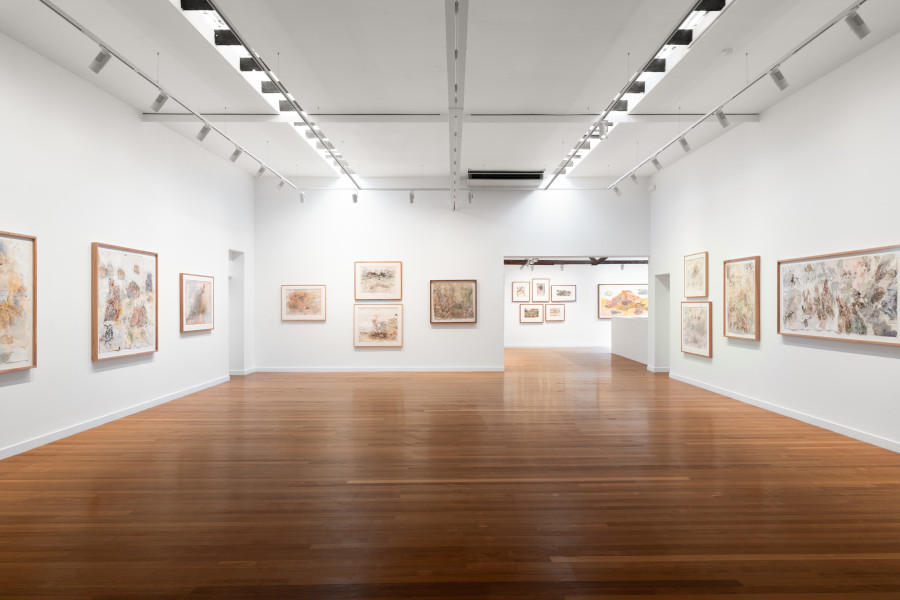
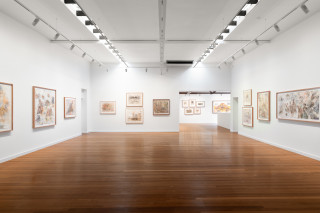
Roslyn Oxley9 Gallery is delighted to present an exhibition of recent works on paper, woodcuts and etchings by John Wolseley.
Exhibition Dates: 20 March – 11 April 2026
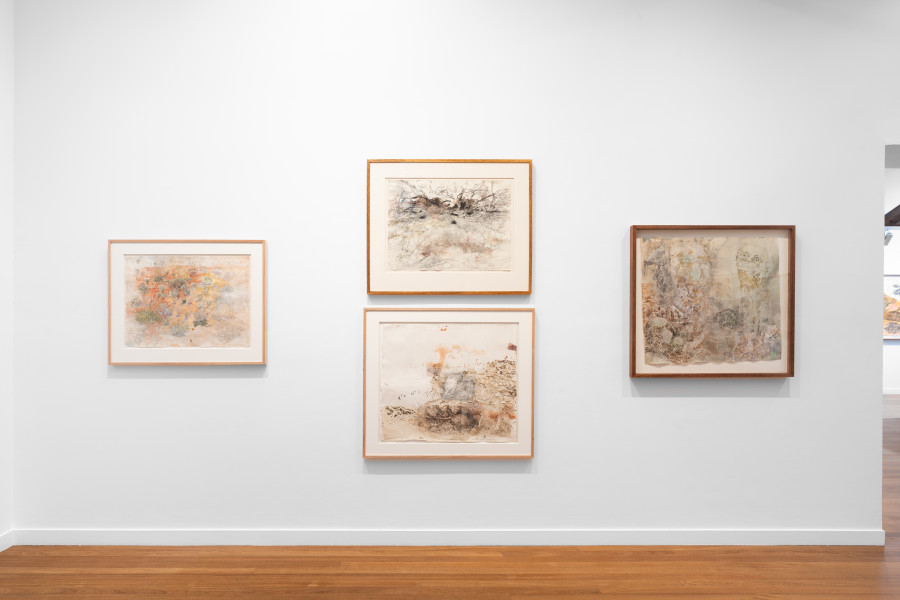
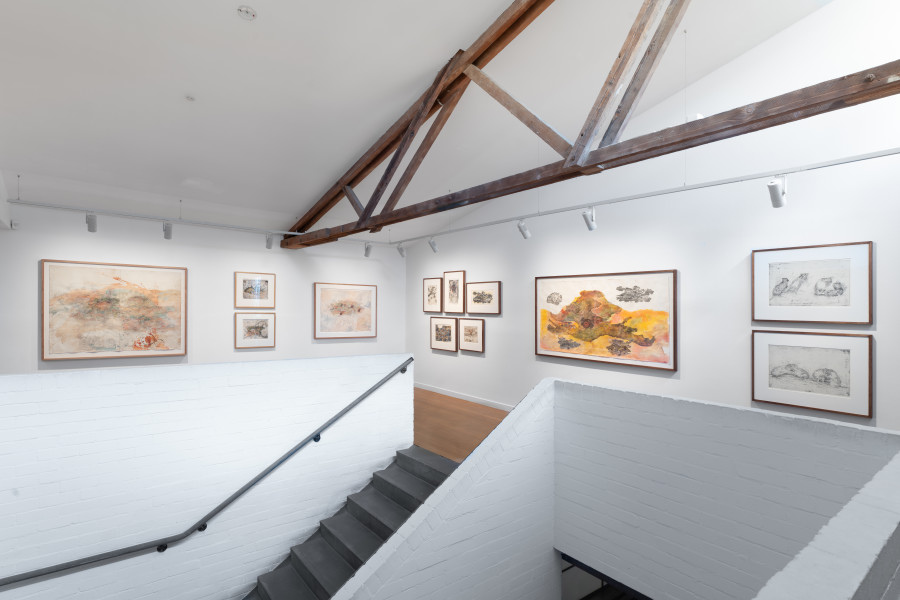
Animal Architecture: Deep Time — Artist’s Notes
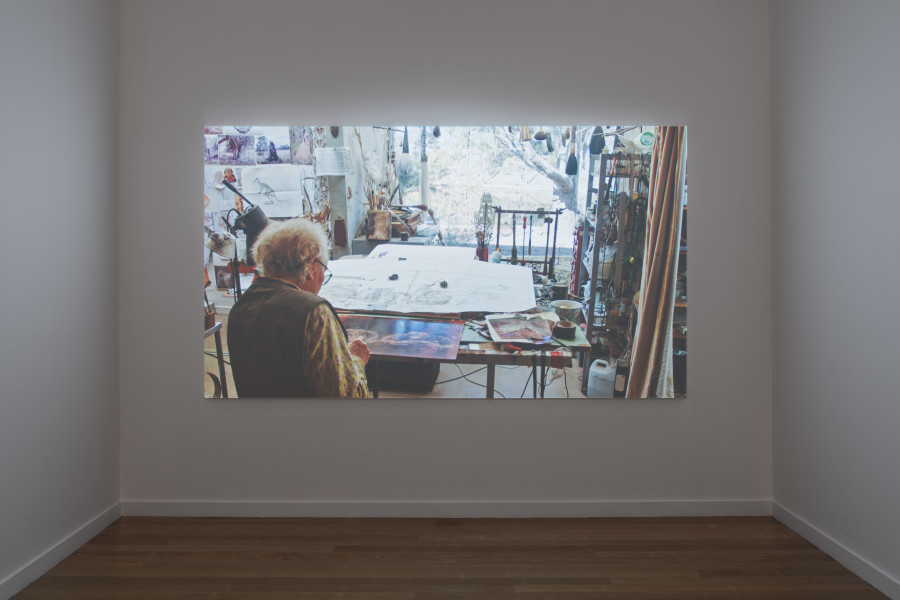
For the last four years, I have been having an El Dorado of a time, investigating and painting the habitat and modes of dwelling of desert mammals and reptiles. It all started when John Kean and I visited one of the Australian Wildlife Conservancy sanctuary at Watikinpirri/Newhaven, west of Alice Springs. I started to draw the different animals which have been returned to their ancestral country after it had been fenced to keep out the cats and foxes that had caused their demise. Greater Bilbies, Bettongs, Mala - Rufus Hare Wallabies and Golden Bandicoots, and many more of the species which used to be all over Australia and which are now sadly reduced to dangerously low numbers. It took some time before I actually saw the creatures in the flesh as it were. When one wanders amongst the Desert Oaks and across the spinifex plains one is physically near the actual critters but they are usually hidden or running away. One sees their tracks and other signs of them. They are cryptic. The OED definition of cryptic is 'secret, mystical, mysterious and enigmatic'.
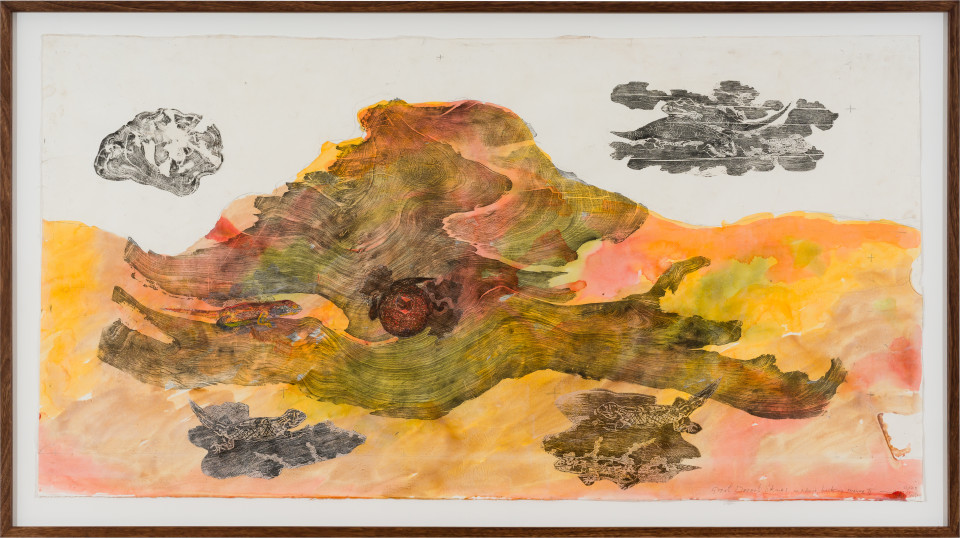
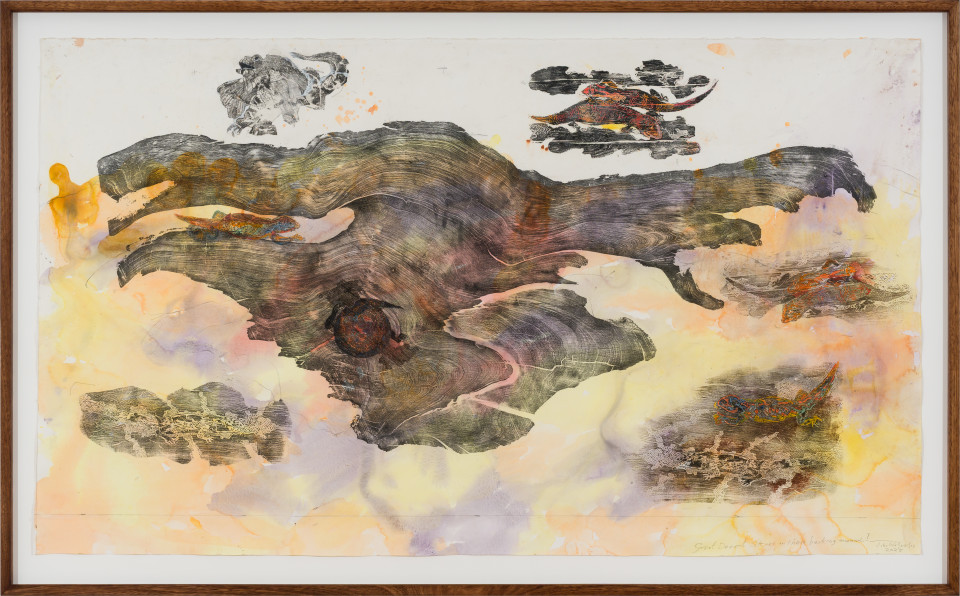
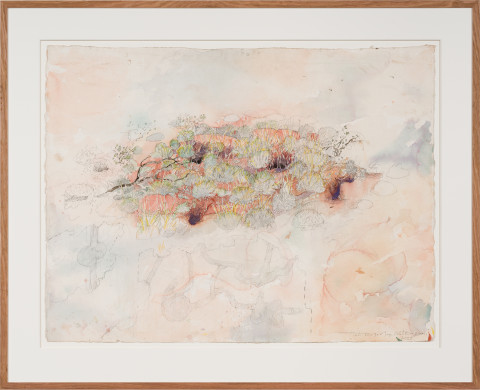
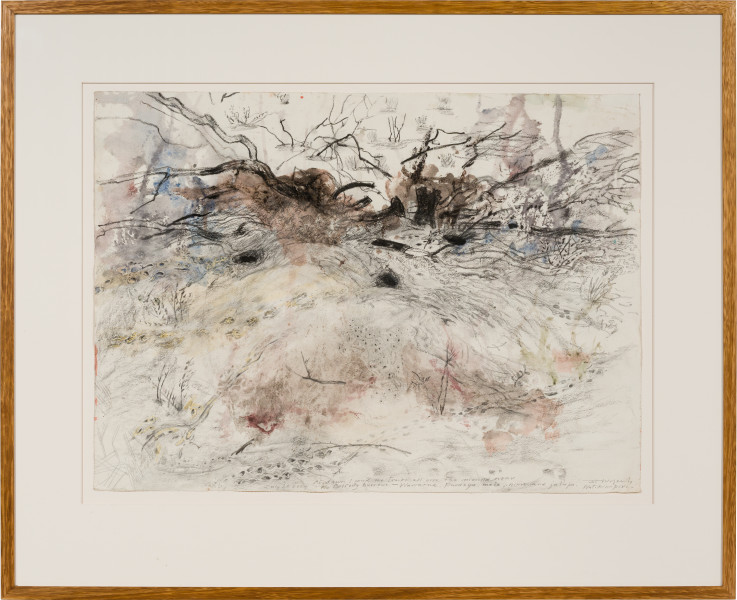
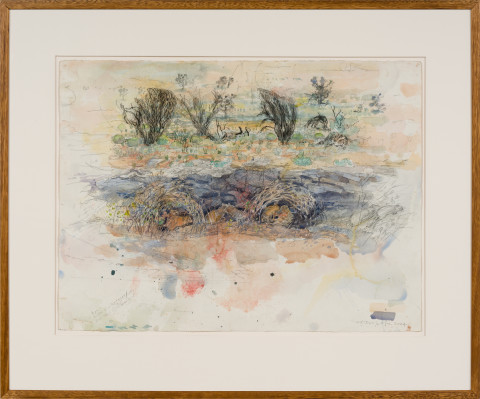
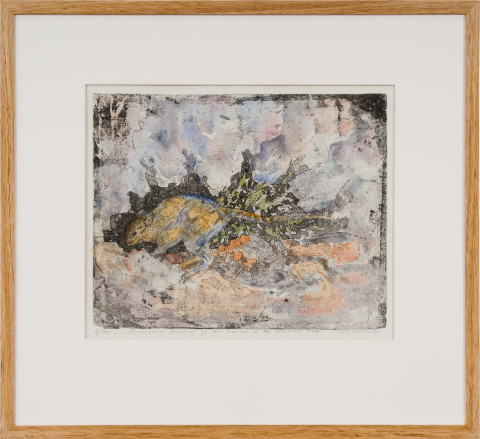
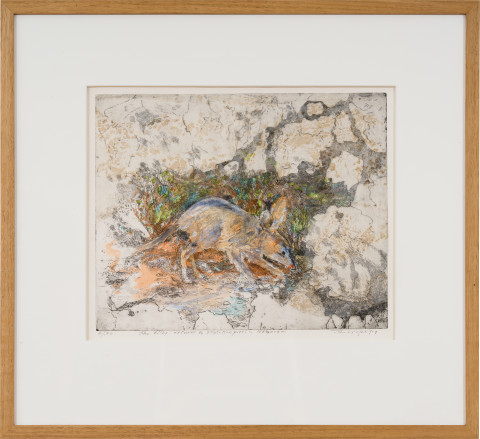
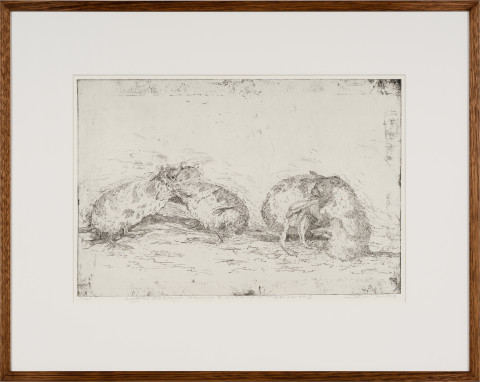
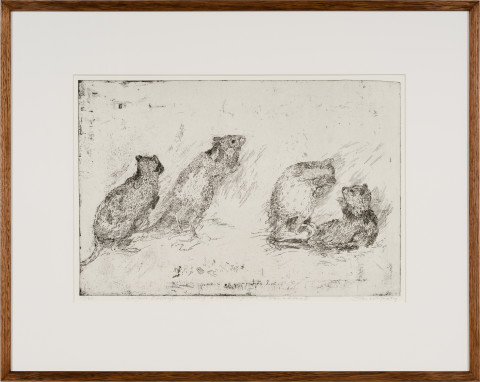
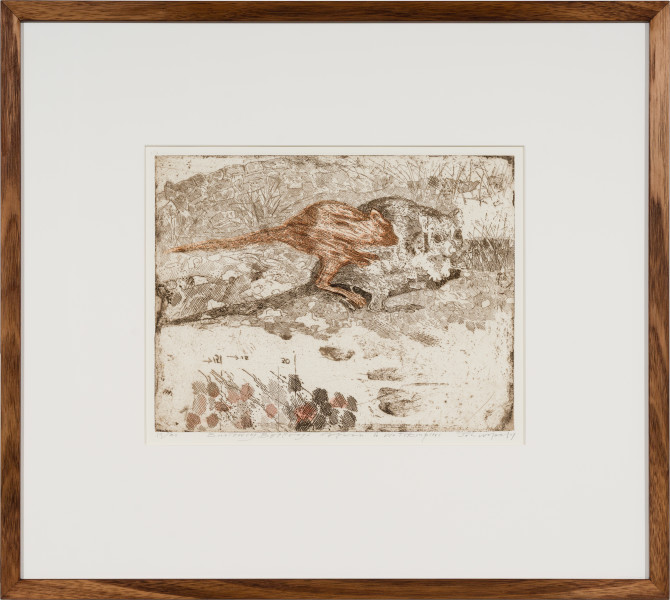
In July 2022, Joe Schofield of the AWC took me to see Bettong warrens in the calcrete rocks which rest between the sand hills. For many thousands of years, Bettongs have burrowed underneath the calcrete slabs to excavate their warrens - living as family groups of 20 or more. They are the only macropod to engage in burrowing and engineering. It was only a year after the Bettongs were released that Joe Schofield took me to see the warrens. It was nearly the first time that he had inspected these particular new diggings and there was a rapturous expression on his face when he saw the voluminous piles of earth piled-up outside the burrows. Joe placed motion-sensitive cameras near several of the burrows. In the morning, we printed some of the images. It was a revelation. One after another the photos emerged like some animated film showing Bettongs popping out of the dark burrows, peering nervously and then bounding out beyond the camera. One felt almost some kind of guilt - or is it just rather rude spying on them like some clumsy paparazzi. One shot caught a Woma python as it moved towards a frightened young Bettong with its mother. This was one of the snakes which had preyed upon the rabbit usurpers for the past 120 years, then starved after the rabbits had been kicked out. They then rejoiced at the arrival of the Bettong restaurant. These photos and others taken by the AWC scientists have been a marvellous resource for me in the making of this exhibition. As in the etchings - Lustful Bettongs returning to Watikinpirri – Newhaven I and II.
Over several days I walked and sometimes crawled over the slabs of calcrete rock under which the Bettongs lived. Sometimes I wore the camouflage clothes I had recently bought. I crawled along the ground very slowly and in short spurts. I think I did go some way into the umwelt or ‘life world’ of these curious earth engineers, and even began to move into some sense of their life in Deep Time. The idea that one could get a feel for the vast time scale during which the land was formed; how the hills rose up and were eroded by wind and water over those thousands of years came to me over the week spent watching the growth of the mounds of earth as they were burrowed out by hyperactive Bettongs. Each day I would see them rise and rise; and then have the sudden and cosmic leap of understanding that the hills on this savannah plan had been created by the burrowing Bettongs over thousands of years.
For me the story about these animals creating the forms and shapes of this country has a beautiful correspondence with First Nations’ stories about how this land was formed by the actions of human and animal ancestor figures. These stories of heroic ancestors (Jukurrpa) are celebrated in the paintings of the great artists of this region. As John Kean commented, it is quite magical to consider the prescient work of the Papunya Tula Artists, the founding painters of the desert art movement, several of whom painted this Country. Their paintings are especially instructive now, as Country is being restored by the AWC working in partnership with Traditional Owners. The network of mythic journeys of Possum Ancestors, painted by Mick Wallankarri Tjakamarra, Tim Leura and Clifford Possum Tjapaltjarri are inscribed into this very landscape. The night of 8 August 2024 was a particularly moving for all involved, as a bunch of boisterous Brush-tailed Possums were returned inside the fence, after having been locally extinct for at least half a century. It felt that Mick Wallankarri’s painting, Storm Men meet Possums and Potato Men at Watikinpirri (1974) suddenly came alive.
Down the years I have talked to many elders from these central desert lands about their connection to Country and what it meant to dwell in the land of their Ancestors. Last year Iria Kuen came to my camp with her fellow AWC ranger, Alice Nampijinpa and we spent the day wandering around the warrens of the Burrowing Bettongs and digging out edible grubs from the roots of Witchetty bushes. My understanding of Walpiri is minimal but I did notice how certain words seemed to come up in the conversation. One was ngurra. Later in Alice Springs, I asked Fiona Walsh the redoubtable environmental polymath about this particular word. She said that the word ngurra could be said to embody – one of the foundational concepts of the aboriginal world view. We looked through the Warlpiri dictionary and found the more obvious translations such as hole, cavity, place for sleeping, camp, nest, lair and burrow. Then there was a further meaning – Country, land (place with which a person is associated by conception, ancestry and ritual obligation).
This was incredibly exciting to me because it seemed to carry with it the idea that a person could be dwelling in their traditional country; and feel that they are deep dwelling in the site which, in the first morning, or Jukurrpa, was actually made by their ancestors. What power and emotional depth this gives to the idea of dwelling and belonging to Country! So different in so many ways from how we whitefellas dwell or do not dwell in Australia.
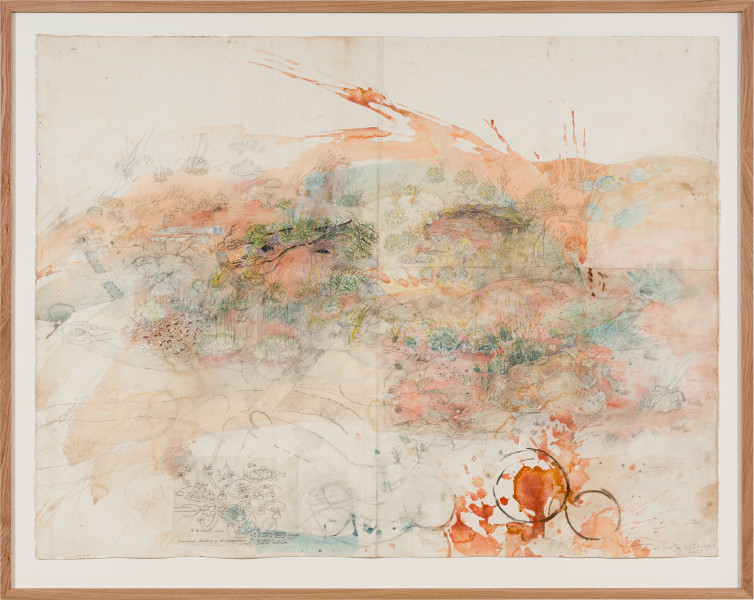
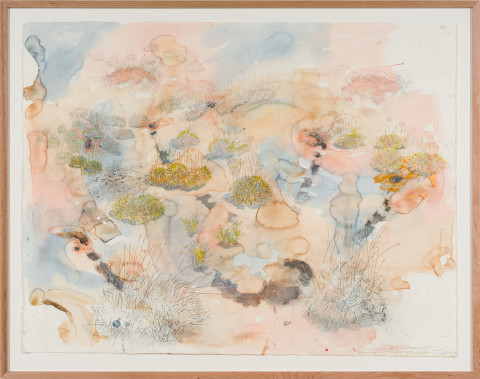
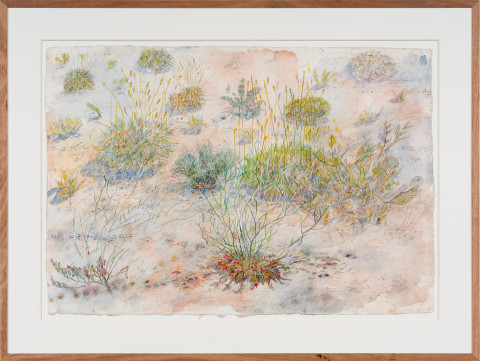
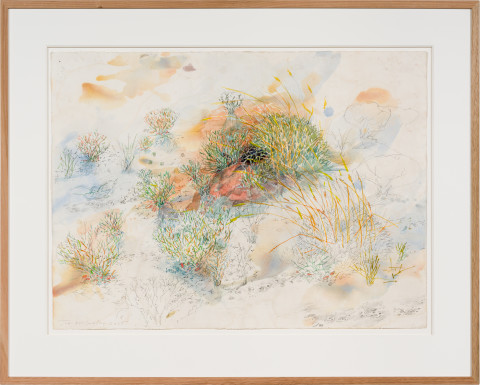
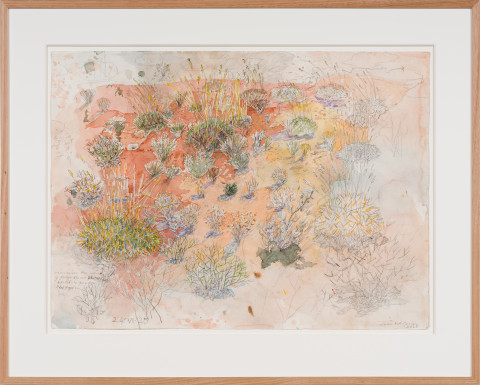
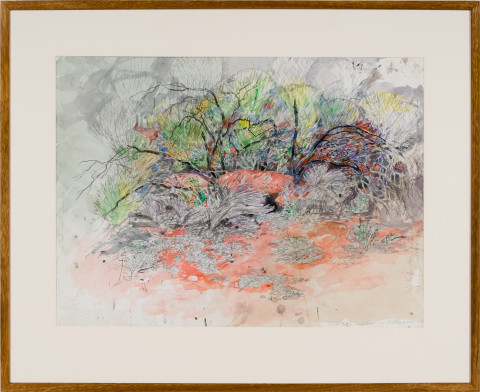
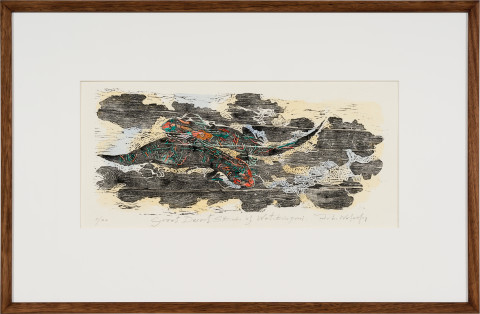
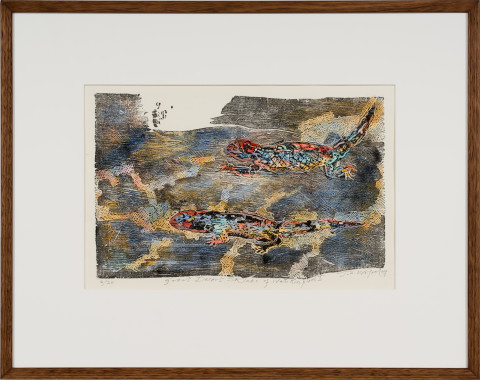
I also spent days and days drawing the Great Desert Skink communes which Dr Danae Moore showed me. It had been a marvellous experience investigating these large golden and pewter coloured Skinks – one of the few lizard species known to construct and maintain underground dwellings. Danae carried her thesis concerning the environmental threats to this vulnerable species, and she would excitedly relate the diagrams to the relevant features of the basking mounds and burrows. These little mounds of glowing red sand rested between the clumps of spinifex and near each one we found the Skink latrines – scatterings of black and white skats. These Skinks live in groups of as many as 30 individuals and share the same basking mound, latrine and even their maternity ward. One can sometimes find the round flat termite pavements which the Skinks use as birthing pools when it rains. The water rests on top of what are actually inverted termite mounds; that is to say, the vertical cones or castles of cathedral termite mounds face downwards into the ground. These shallow lenses of water are where the Skinks give birth to their young. I put my easel next to a beautifully rounded basking mound. It’s like a miniature sand dune, with the tracks of bilbies and bettongs skittering over it. But no Skink foot prints. They were all fast asleep – hibernating all through these winter months. One day as I approached the mound, I saw a little golden puff of sand and the blur of a moving creature. Phew! A sleepy Skink must have chosen that moment to emerge onto the mound and steal a bit of winter sun. Then I saw the imprint of a perfect fan-like hand there on the sand, So crisp, so clear! Such a precious gift.
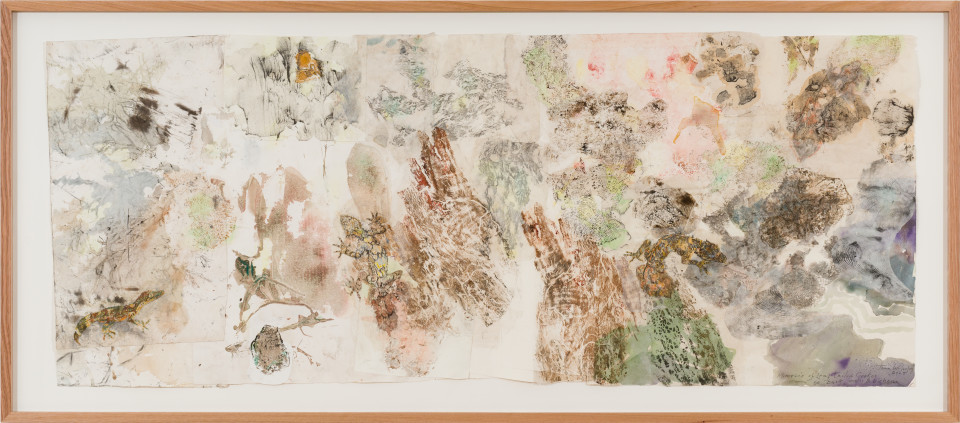
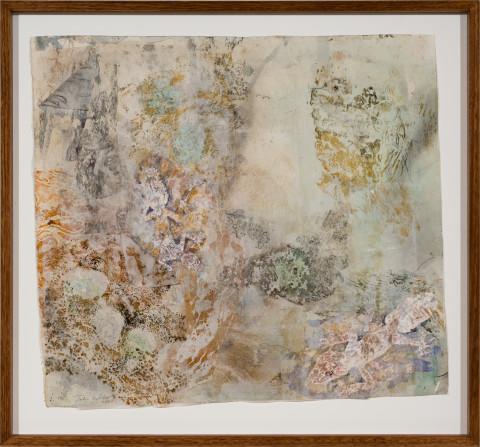
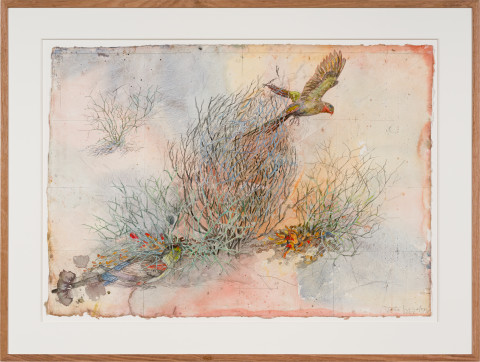
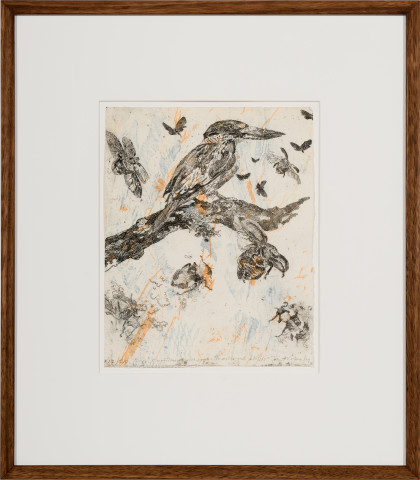
In this exhibition there is also a series of paintings about Leaf-tailed Geckos – another rare species which the AWC have been conserving in their NSW Wildlife sanctuaries. I first drew Lucy’s Leaf-tailed Gecko 30 years ago in a New England rainforest. In the painting - Mimesis - Leaf-tailed Geckos on bark, moss and lichen there are a number of heavily camouflaged ‘Leafies’. These Geckos are famous for their flat bodies and leaf-shaped tails and the way 'they blend seamlessly into their surroundings.’ I love the way the way the OED uses the word ‘seamless’ in this context. These lizards do fit so seamlessly into the architecture of the bark and rock rainforest habitat. The word seam is described as ‘the space between the adjacent planks or strakes of a ship.’ I have sometimes watched these geckos as they are camouflaged within the slabs of bark or fissures of sandstone rock. The blotches of lichen or moss move seamlessly over the surfaces of the tree trunk and the gecko’s skin. These geckos are such an integral part of their home. They are so camouflaged that from a distance lizard and habitat are all one. These Leafies hide in plain sight while the Burrowing Bettongs hide within their architecture.
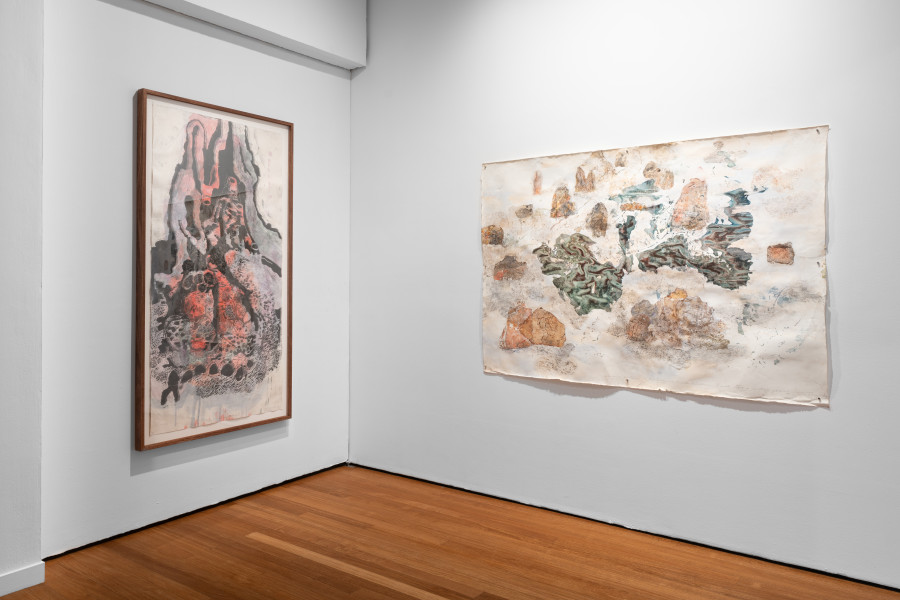
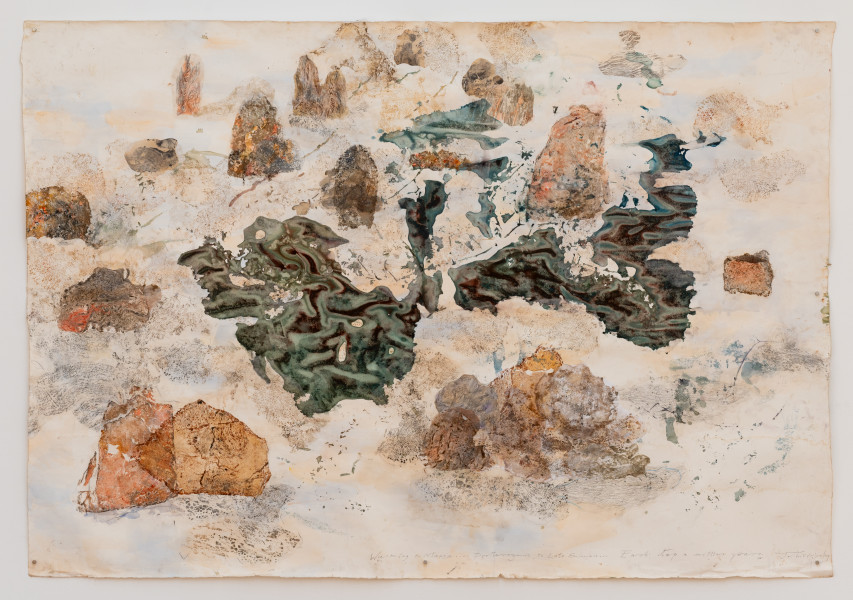
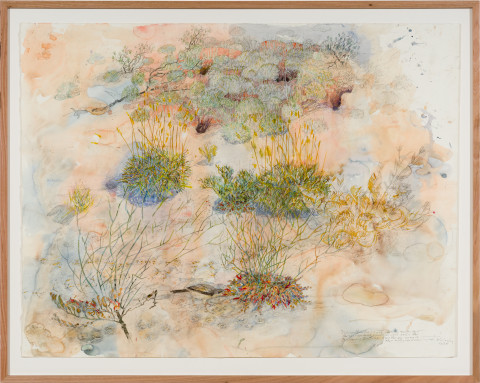
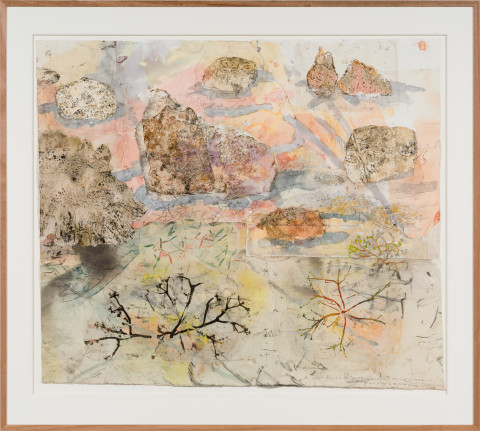
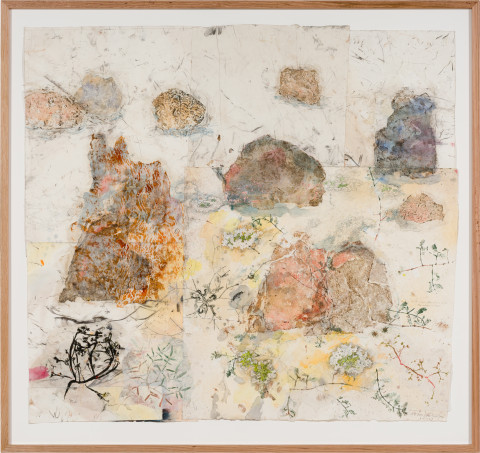
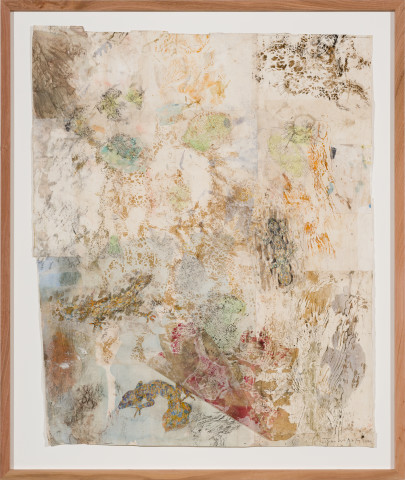
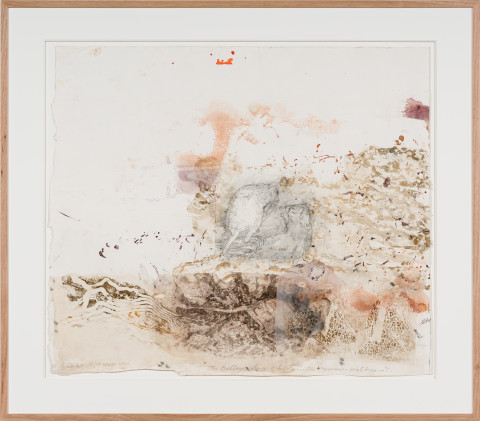
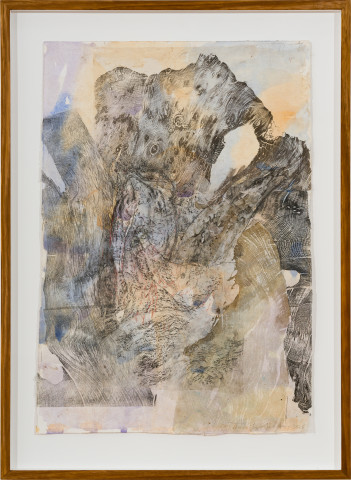
The most recent paintings in this exhibition are based on walks I have done following creek beds and ravines as they go west from the McDonnell Ranges. I have been wandering over the banded landscapes of the Alice Springs orogeny - walking between these rocky outcrops. Over many miles the upturned strata, tablets of stone, move into the distance for miles and miles. The history of the earth is engraved on them - the strange cuneiform writing of evolution. Over some ten kilometres one travels over a billion years of geological time. The first living organisms some 850 million years ago, the stromatolites are there on the sides of the ranges. Then one comes across the first bivalves and marine worms. I have been told that if one was to go a further 400 million years it could be possible to find the fossils of the first fish to put its head on dry land and breathe the air.
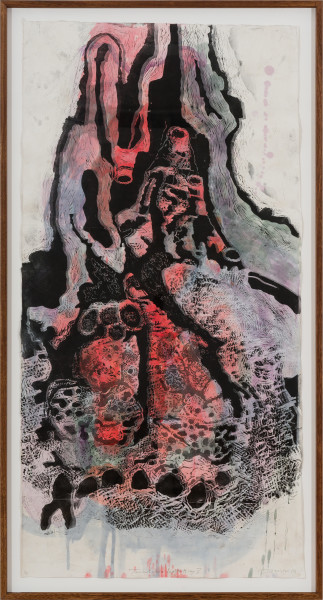
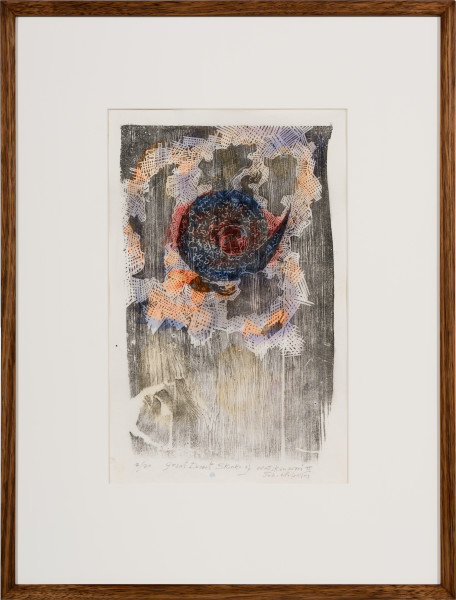
I have been making rubbings and painting layers of latex over the fossiliferous rocks. Then I have been making prints from these moulds on Gampi paper. In the series, Walk across geological strata - Proterozoic to late Silurian: each step a million years, I have collaged these prints onto the images of rock in the painting. In the gaps between I have made nature prints of some of the reclining plants. In this way I am making a painting in which the land is printing itself. As I was doing this I realised I was again documenting the architecture of the ancestors of those amazing animals - Bilbies, Bettongs and Skinks - which I have spent so much time drawing in the last years. I was finding that these ancestral creatures now in fossil form are still an integral part of the landscape; their forms turned to stone.
John Wolseley
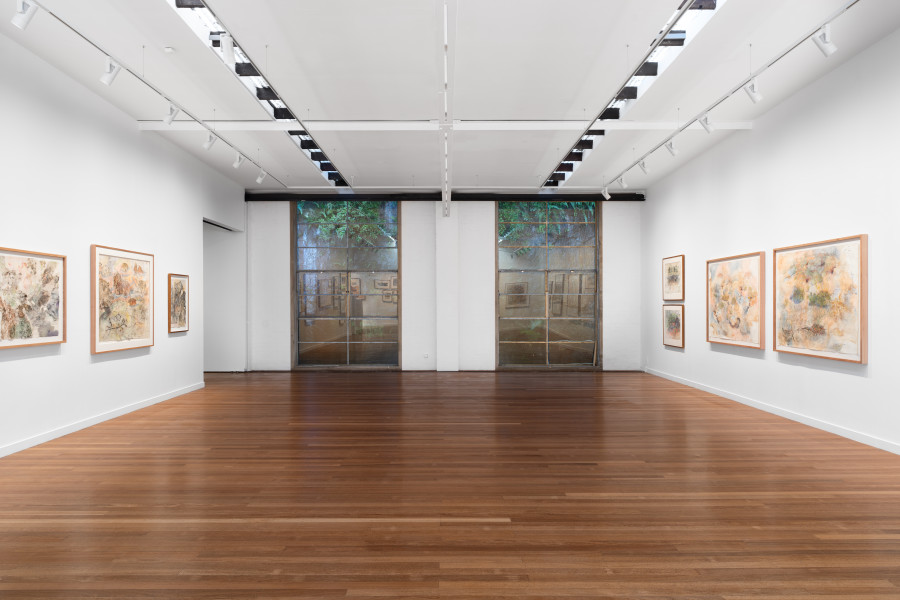
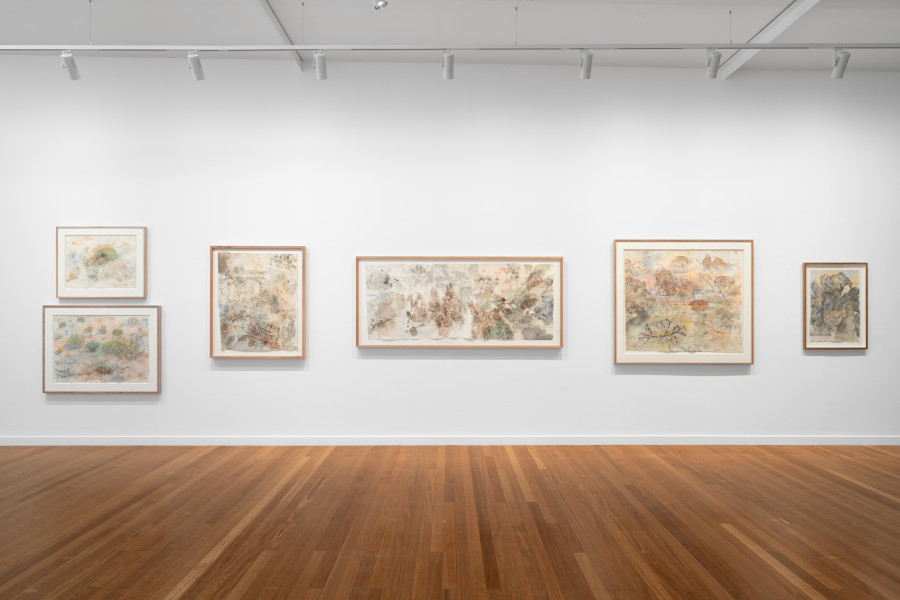
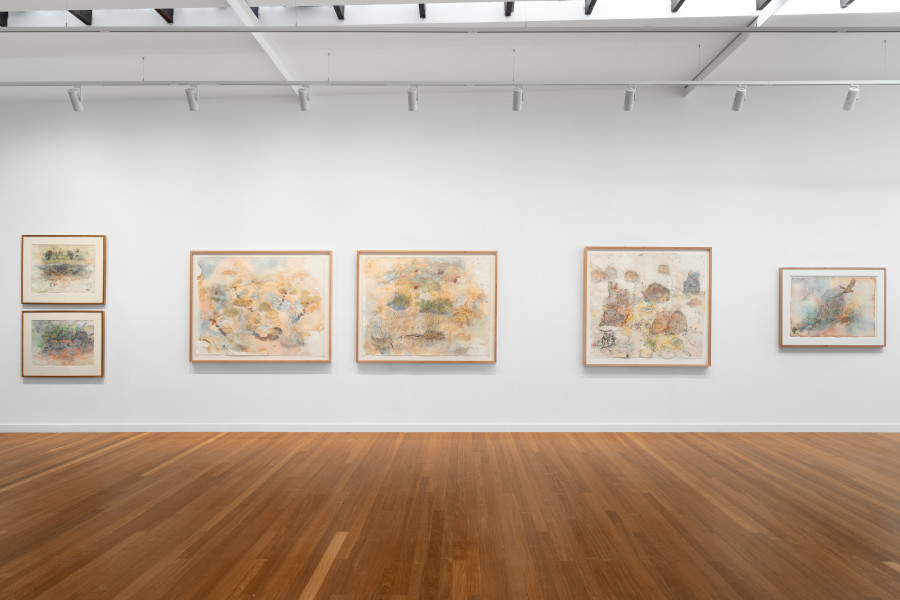
 John Wolseley Animal Architecture: Deep Time
Roslyn Oxley9 Gallery, 2026
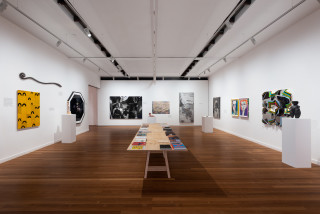 Group Show, The First 40 Years
Roslyn Oxley9 Gallery, 2024
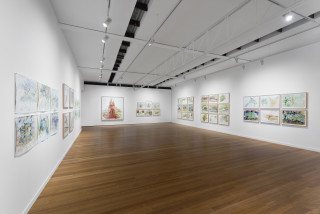 John Wolseley Regenesis - Slow Water - Deep Earth.
Roslyn Oxley9 Gallery, 2023
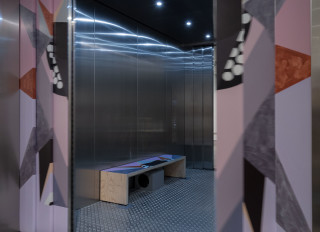 Group Show, Still Life
Buxton Contemporary, 2022
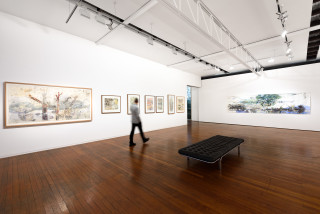 John Wolseley One Hundred and One Insect Life Stories
Roslyn Oxley9 Gallery, 2019
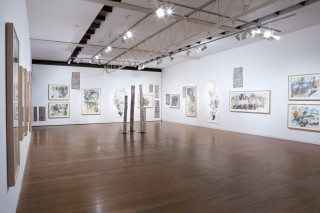
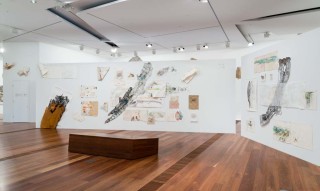 John Wolseley Heartlands and Headwaters
National Gallery of Victoria, Melbourne, 2015
John Wolseley all our relations
18th Biennale of Sydney, 2012
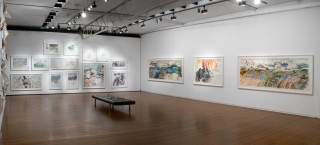 John Wolseley Carboniferous
Roslyn Oxley9 Gallery, 2010
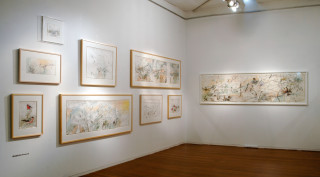 John Wolseley Natural Selection: MALLEE/MAQUIS
Roslyn Oxley9 Gallery, 2008
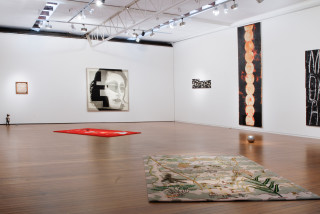 Group Show, STOLEN RITUAL
Roslyn Oxley9 Gallery, 2006-07
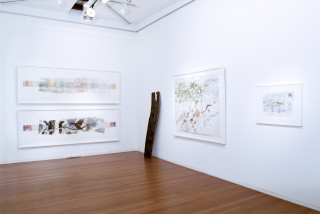 John Wolseley The Wood, The World, and The Parrot
Roslyn Oxley9 Gallery, 2006
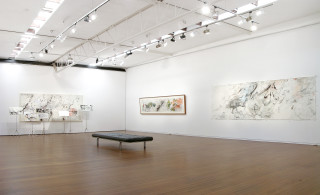 John Wolseley Bird on a Wire
Roslyn Oxley9 Gallery, 2005
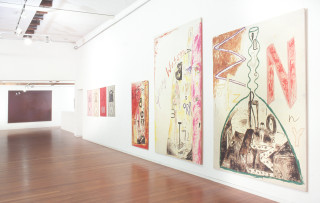 Group Show, Dirty Dozen
Roslyn Oxley9 Gallery, 2002
 Group Show, The First 20 Years
Roslyn Oxley9 Gallery, 2002
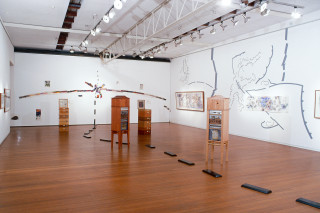 John Wolseley Tracing The Wallace Line
Roslyn Oxley9 Gallery, 2001
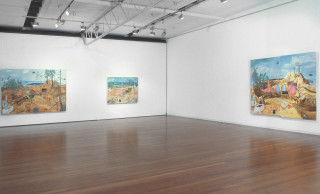 Group Show, A constructed world (in collaboration with John Wolseley)
Roslyn Oxley9 Gallery, 1997


- About
- Subscribe

